
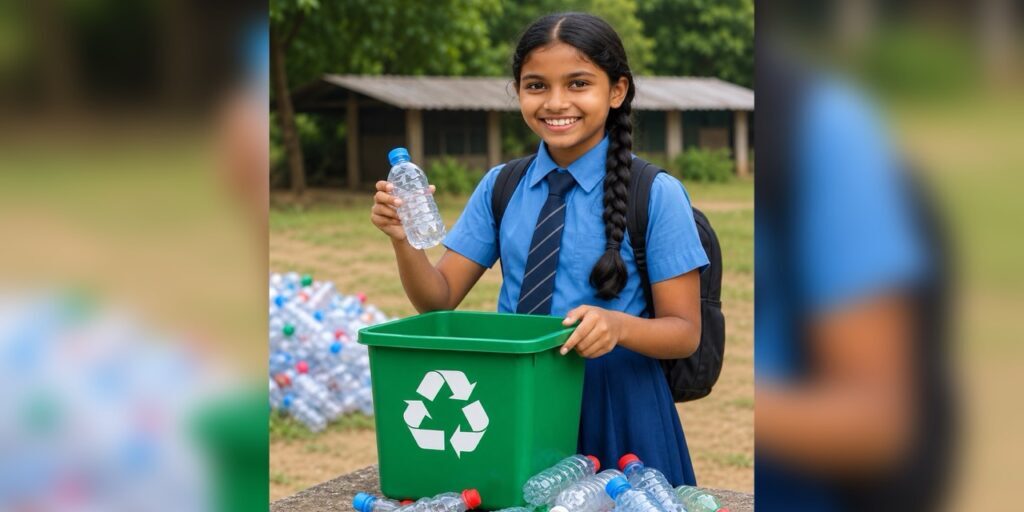
When people think about plastic pollution, they often picture overflowing landfills or littered coastlines. But what if a discarded plastic bottle could represent something more than waste? What if communities could turn it into opportunities for students, resources for schools, stronger communities, and a cleaner environment?
That vision drives Waste to Wealth (W2W), Global Communities’ social enterprise initiative in Sri Lanka. W2W is changing how communities view and manage plastic waste. The initiative connects recycling with youth engagement, education, and financial inclusion, showing how environmental action can create benefits far beyond waste reduction.
Sri Lanka faces a significant plastic challenge. The country generates an estimated 938 tons of plastic waste each day but recycles only 4% of it daily. At the same time, many environmental education efforts struggle to turn awareness into sustained action. Global Communities designed W2W to address both challenges through a practical, community-driven model that rewards participation and shows the value of circular economy solutions.
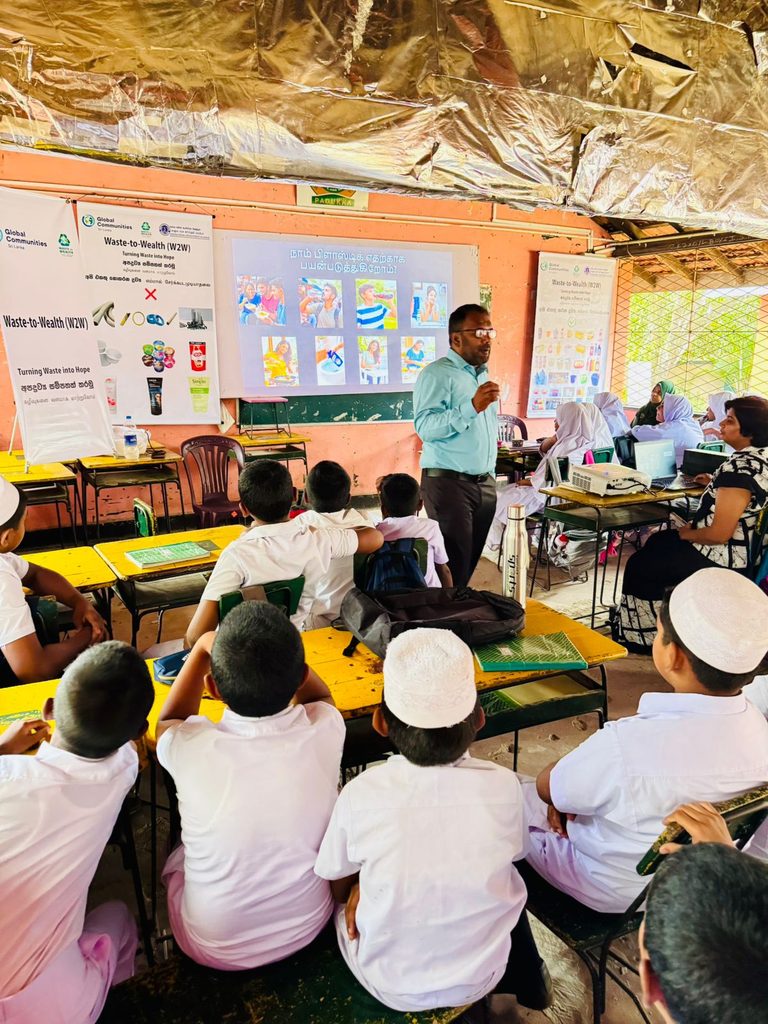
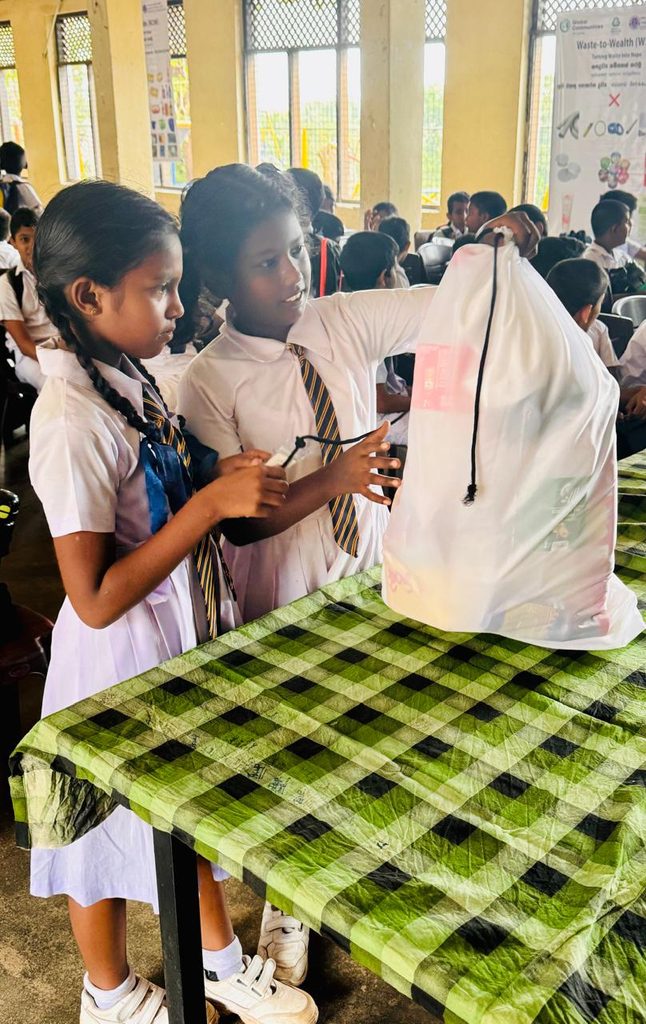
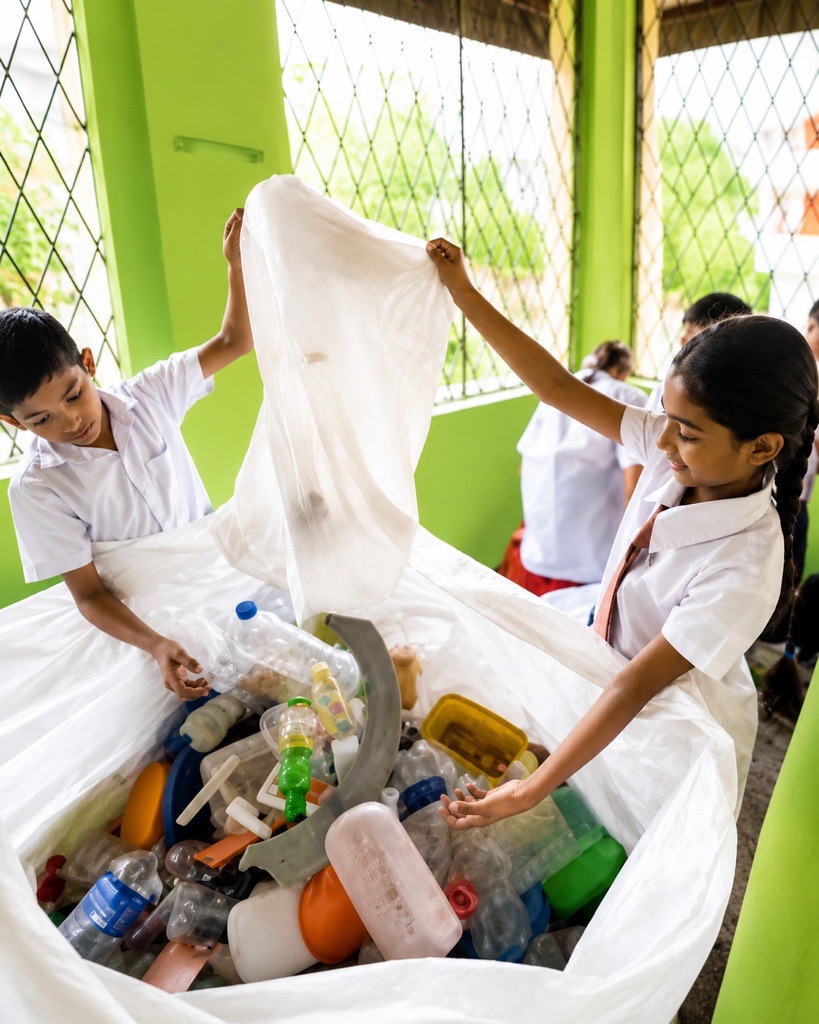
Following the Journey of a Plastic Bottle
At the heart of the W2W model is the idea that plastic should not be viewed as waste, but as a resource.
The cycle begins when students, families, and community members collect post-consumer plastic. Participating schools and local collection networks gather the material, and W2W sorts, processes, and transports it to recycling facilities. These facilities transform the plastic into yarn, monofilaments, and other industrial materials that manufacturers can use to create new products.
This lifecycle shows how local environmental action can contribute to a global value chain. A bottle that a student collects at school today can eventually become part of a textile product. By showing participants how plastic moves through this cycle, W2W makes the circular economy tangible and accessible.
More than recycling
Waste to Wealth stands apart from many recycling initiatives because its model creates value for multiple stakeholders.
Students practice environmental stewardship while learning how individual actions can shape their communities. Schools gain support and resources by participating in the program. Recycling partners access a reliable, traceable source of raw materials. Communities benefit from reduced plastic pollution and increased environmental awareness.
Together, these benefits create an ecosystem in which environmental, social, and economic outcomes reinforce one another.
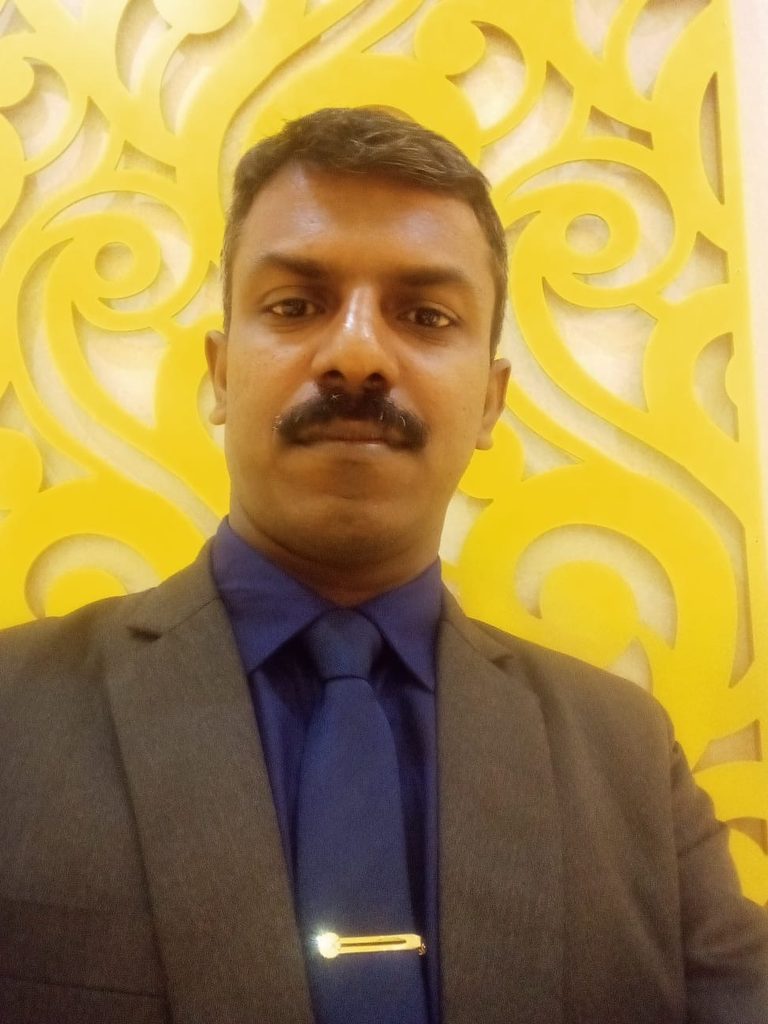
“The work being carried out with schoolchildren to encourage the proper recycling of plastic waste, which is a serious global environmental issue, … deserves appreciation. The students of Padukka Siripiyarathana Central College are very enthusiastic and actively interested in participating in these activities.”
– Rusiru Munasinghe, Deputy Principal – Sports & Co-curricular Activities – Padukka Siripiyarathana Central College
Early results show growing momentum
As Waste to Wealth moved from planning to implementation, the initiative delivered measurable results across three provinces in Sri Lanka.
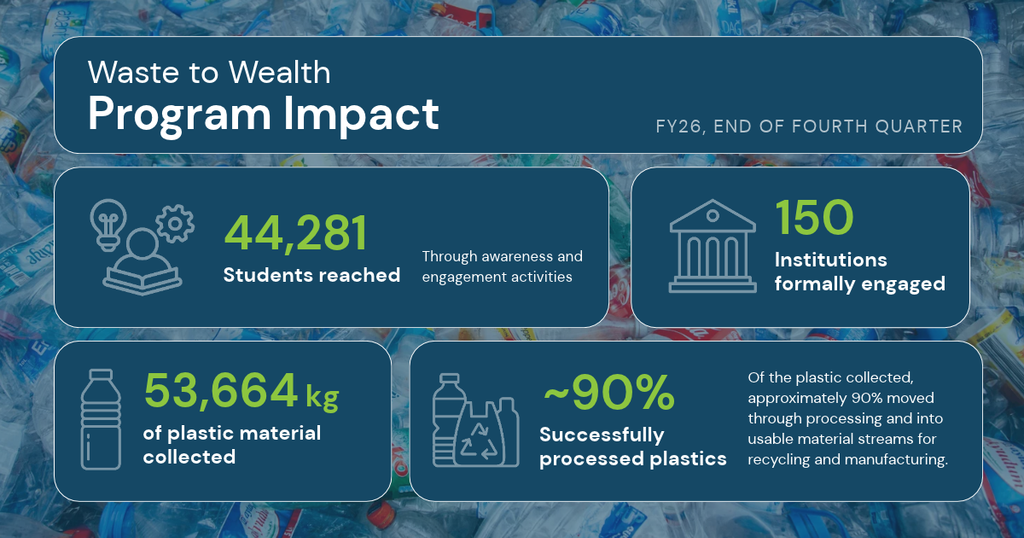
By the end of the fourth quarter of FY26, W2W had reached 44,281 students through awareness and engagement activities, formally engaged 150 institutions, and collected 53,664 kilograms of plastic. The program successfully processed approximately 90% of the collected plastic and directed it into usable material streams for recycling and manufacturing.
These numbers represent thousands of students learning about environmental responsibility, dozens of institutions investing time and resources in a shared effort, and communities taking practical steps to reduce waste.
W2W has also built partnerships with schools, local organizations, recyclers, and other stakeholders. By the end of Q4, the initiative had formally engaged approximately 54 partners across three provinces, building a foundation for long-term growth and sustainability.
Learning and Adapting for Scale
Like any pilot initiative, Waste to Wealth has produced valuable lessons along the way.
During the initial phase of implementation, program leaders identified lower-than-expected collection volumes per student. Rather than view this as a setback, the team used the experience to refine the model and improve its efficiency. The team recruited additional schools along existing collection routes, explored transportation improvements, and expanded engagement with corporate partners that generate significant amounts of plastic waste.
This willingness to learn and adapt plays a critical role in the initiative’s long-term vision. Perfect execution does not define a strong social enterprise. The ability to test ideas, gather evidence, and adapt based on real-world experience does.
Encouragingly, demand for participation continues to grow. More schools, communities, and corporate organizations have expressed interest, and the initiative recently added 80 schools to the current phase of implementation.
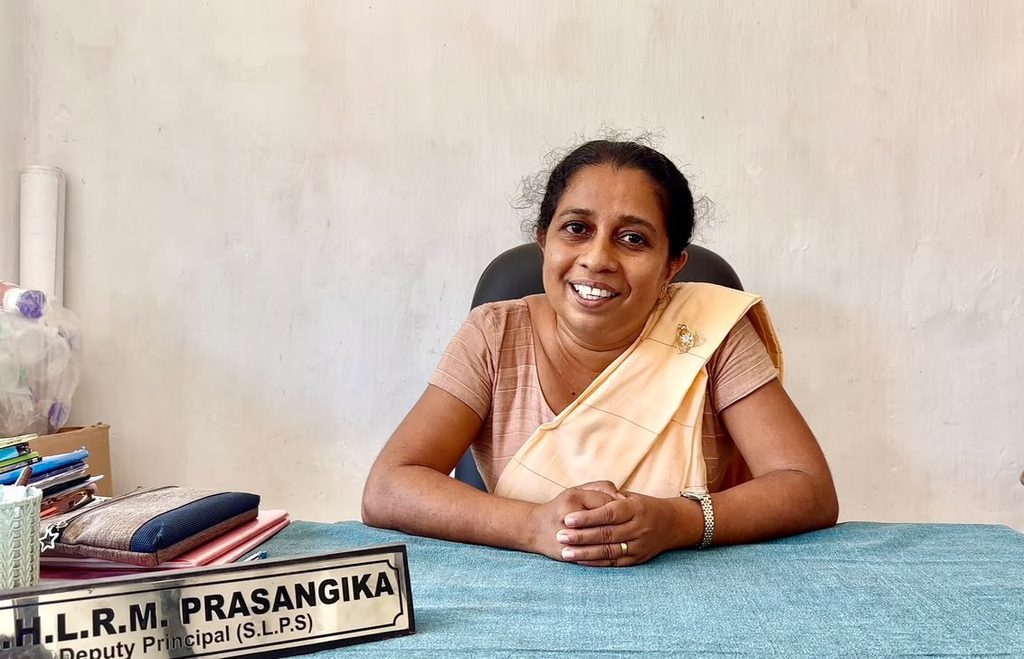
“This program is a very successful intervention. Not only in our school, but if it can be taken to all schools, … we can have hope to create a better, more sustainable world without plastic.”
– A.H.L.R.M. Prasangika – Vice Principal, Pitipana Junior School
Building a Blueprint for the Future
Waste to Wealth was never intended to be just another recycling project. The approach advances many of the United Nations Sustainable Development Goals by creating local economic opportunities, promoting circular resource use, reducing waste and pollution that can affect marine environments, strengthening community-led environmental action, and fostering partnerships.
W2W shows that technical interventions alone cannot solve complex challenges such as plastic pollution. Lasting solutions also depend on people, partnerships, and systems that make sustainable behaviors accessible and meaningful.
As the program continues to expand, its greatest contribution may not ultimately be the kilograms of plastic it collects. Its lasting contribution may be the model it offers for how communities can work together to transform a local challenge into a shared opportunity.
Because when young people are empowered to take action, environmental stewardship becomes an investment in the future.