
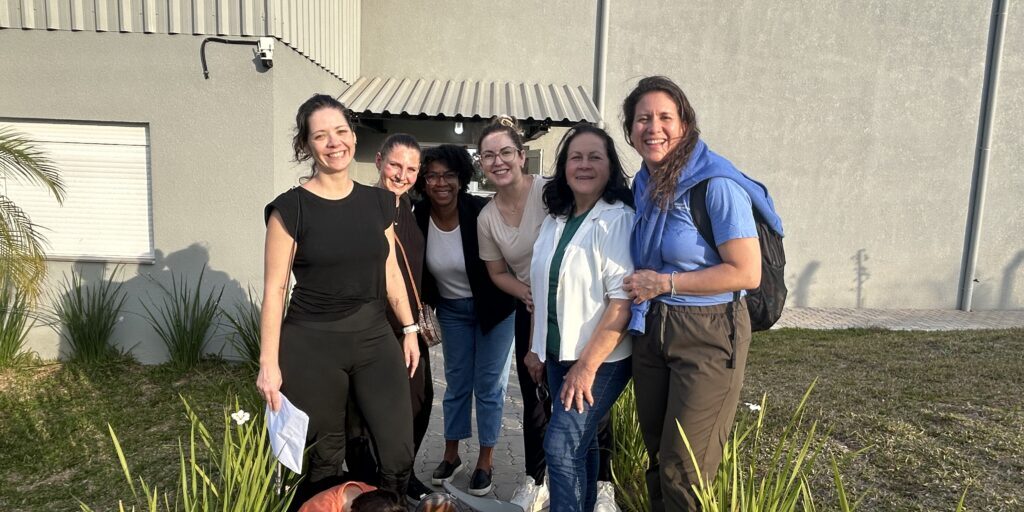
By: Mabel Bejarano Cobo, Technical Advisor Financial Inclusion
A few months ago, I had the privilege of visiting several recycling cooperatives under Project Coopera in Brazil that Global Communities has supported over the past year. This work aims to advance leadership and economic empowerment for these communities, especially for women and young people. Before the trip, I knew of these groups only through documents, reports and through anecdotes shared by colleagues during our regular meetings. This time, I would have the opportunity to meet cooperative members in person, listen to their stories, tour their workplaces, and gain firsthand insight into how empowerment and organizational strengthening efforts have impacted their lives.
What I found did not disappoint; I met people who were committed, proud of their work, and deeply dedicated to building a better future for their communities. I met families, friends, and coworkers, and people of all ages. I met women leaders who, with great conviction, drive the growth of their cooperatives and the well-being of their members far beyond providing a source of livelihood.
A Leader Named Beatriz
One of those leaders was Beatriz, the young coordinator of Cooprevive, a recycling cooperative in Sapucaia do Sul, on the outskirts of Porto Alegre. Her confidence and pride in her organization reflect the successes that have come from access to training, support, and opportunities.
Earlier this year, we began working with Cooprevive and five other cooperatives in the region, providing training in communication, decision-making, problem-solving, business management, and business plan development.
This program had already been implemented with women across Latin America and Africa, but we only recently adapted the materials for the Brazilian context. We knew that more than 40% of the members of recycling cooperatives in the country are women, and many face barriers related to confidence, leadership opportunities, and business management skills.
Inside Coprevive
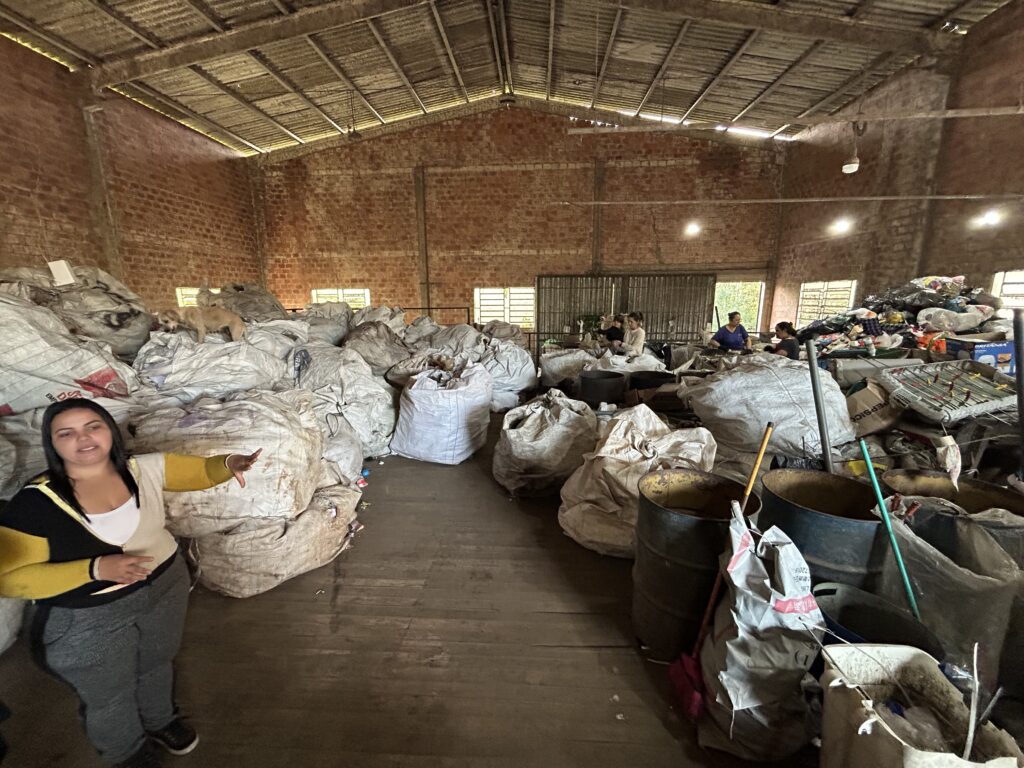
After leaving the city behind and driving through green landscapes and a forest reserve, we arrived at Cooprevive’s large warehouse. The first to greet us were the cooperative’s guard dogs, a constant presence at nearly every cooperative we visited (they are part of the team too!). Shortly afterward, Beatriz emerged with a warm smile and began sharing the story of the cooperative.
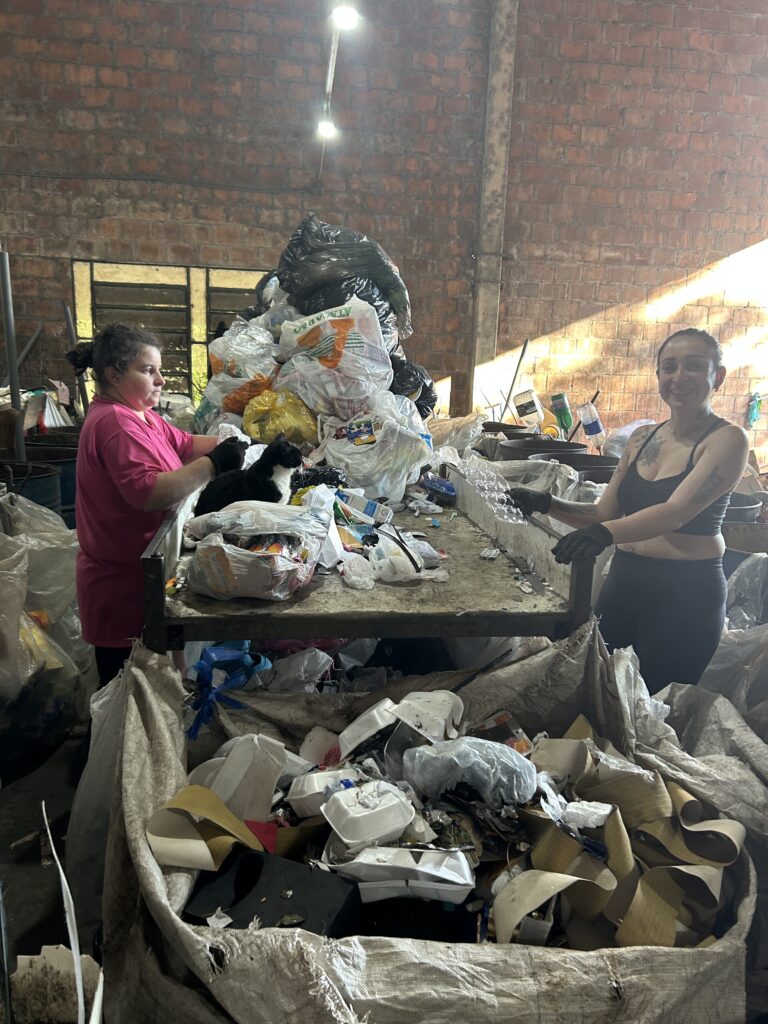
Today, the cooperative has 32 members, the majority of whom are women. Many of them previously worked as independent waste pickers on the streets before joining the organization. As is the case in other cooperatives, several members are survivors of gender-based violence or have struggled to find dignified employment opportunities. Others simply were looking for a place where they felt they belonged. The cooperative provides them with a safe environment, stable income, and, above all, the opportunity to be part of a collective where every voice matters and decisions are made together.
Turning Waste Into Opportunity
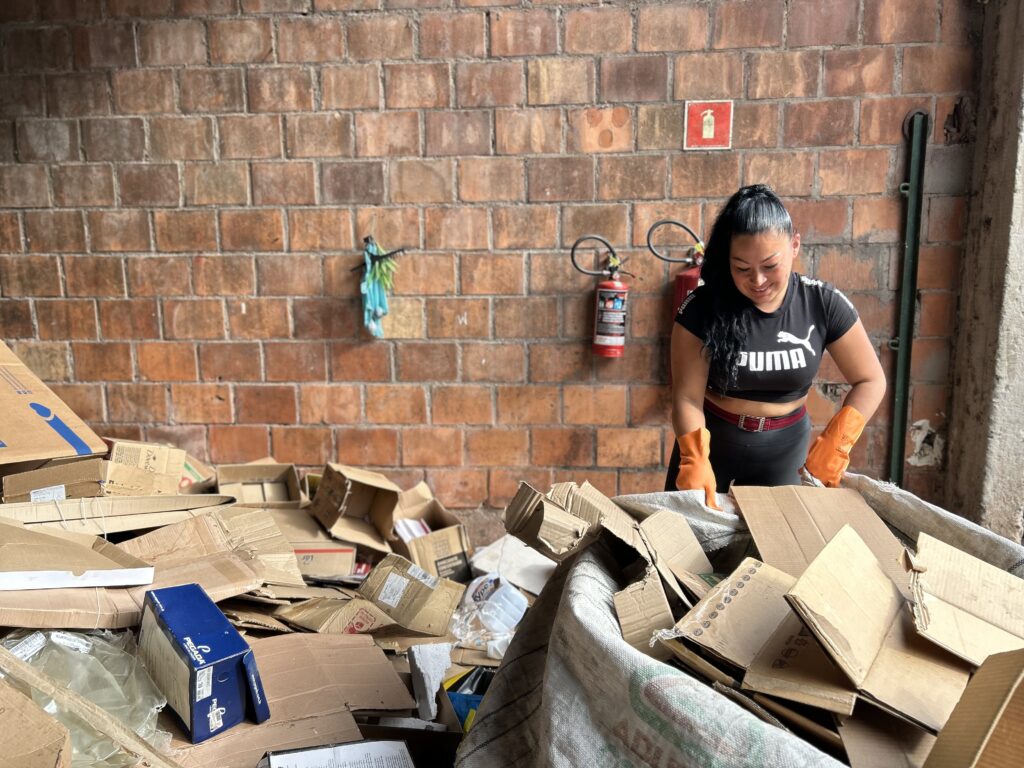
During the tour, Beatriz showed us how the recycling facility operates. Materials enter through an upper platform where they are carefully sorted. They then move to the baling and packaging area before being sold. I was struck by the level of organization that existed amid tons of waste. Every material had its place: cardboard, aluminum, PVC, white plastics, and colored plastics. Behind that system were knowledge, methodology, discipline, and coordination.
Throughout the trip, it became clear that the most successful cooperatives are those that have established diverse partnerships with municipalities, private companies, residential complexes, and other institutions. These relationships ensure a greater volume of materials, reduce operating costs, and improve working conditions for waste pickers. Furthermore, when cooperatives, as in the case of Cooprevive, can offer certifications that help companies meet environmental goals and gain tax incentives, a mutually beneficial relationship emerges that supports long-term sustainability.
Recognition, Dignity, and Belonging
Beyond recycling itself, many of the people I met spoke about the importance of being recognized as essential actors within the consumption cycle. Despite their contributions, waste pickers are often overlooked. There is still significant work to be done to raise awareness about the environmental services they provide and to ensure they are treated with the respect and dignity they deserve.
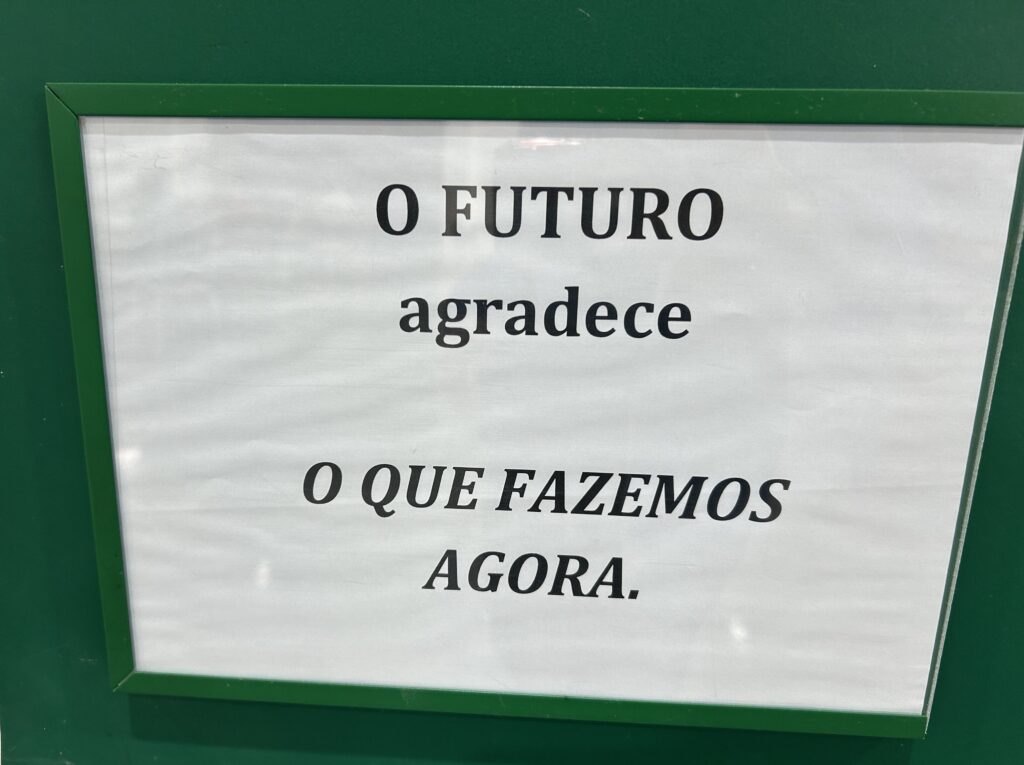
During one of the visits, I saw signs that read, “The future appreciates what we do today,” and, “Recycling is giving things a second chance.”
I was touched by what these simple words revealed about how waste pickers see their role in society, and it filled me with happiness to imagine that, through our work, we might help bring about a future where everyone agrees with these statements.
Changing Behaviors Through Education
Environmental education has been a key tool in bringing about this change. In Cooprevive’s case, collaboration with the municipality has made it possible to develop community campaigns on proper waste separation. As a result, the quality of recyclable materials has improved, and today, only a small portion of what is collected ends up being discarded. We were told that when people meet the waste pickers, connect their faces with the role and hear their stories firsthand, they feel more compelled to correctly separate waste. Human connection can be just as important as education in changing behavior.
The Power of Partnership
Collaboration remains essential to the success of these organizations. At Cooprevive, the municipality covers key expenses such as water and electricity, finances transportation for members, and has provided trucks for material collection.
Other forms of support arise more spontaneously. We learned about a volunteer who initially began by bringing waste materials to the cooperative and now teaches weekly yoga classes to members to support their mental well-being.
Building Stronger Cooperatives
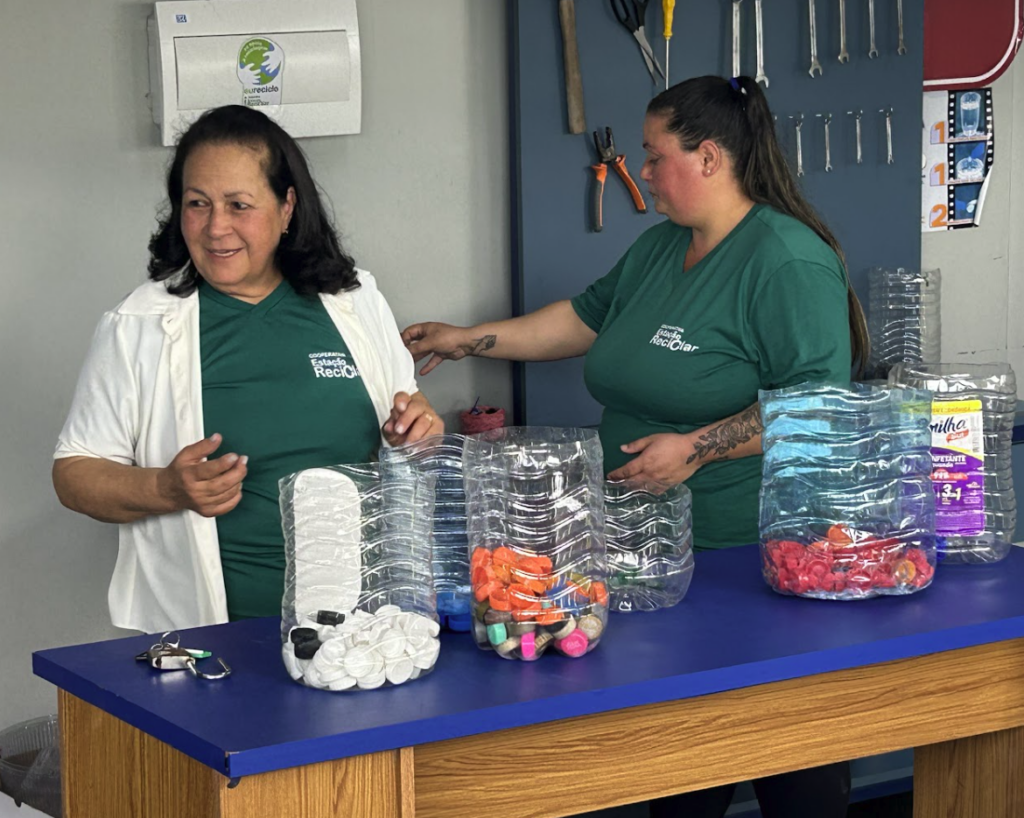
Throughout the visits, it was evident how much the cooperatives value the support they have received from Global Communities. Our work seeks to strengthen their organizational and business capacities so they can grow sustainably and increase opportunities for their members.
Before participating in the program, the cooperatives told us that they faced challenges related to internal communication, teamwork, planning, and access to resources. The training has helped strengthen their confidence, improve dialogue, and encourage greater participation by both women and men in decision-making.
Several participants shared how they have seen important changes in leadership; they now organize activities more effectively and how their ability to solve problems collectively has improved. One of the most significant achievements has been strengthening the groups’ resilience and helping them develop a clearer vision for their cooperatives.
Growth Beyond the Workplace
At the individual level, participants reported meaningful changes in self-esteem, emotional well-being, self-care, personal organization, and their ability to plan for the future.
There is, however, much work still to be done. We continue working alongside these women and men to strengthen financial literacy, accounting, business management, negotiation, and life skills. They also need greater access to personal protective equipment, machinery, and infrastructure, as well as expanded market opportunities through certifications and long-term contracts. Continuing to promote women’s leadership and youth participation will be essential to ensuring the future sustainability of these organizations.
A Future Worth Building
I returned from Brazil inspired by the determination, creativity, and solidarity I found at every cooperative. These organizations transform waste into opportunity, but they also turn challenges into hope.
As I left Brazil, I found myself thinking again about the sign that read, “The future appreciates what we do today.” Those words capture more than the work of recycling. They reflect the commitment of people like Beatriz and her colleagues, who are building stronger organizations, creating opportunities for others, and helping shape a more inclusive and sustainable future for their communities. It is an honor to be part of that journey.