Situated in the southernmost part of the Americas, Argentina is currently grappling with a socioeconomic and political crisis, reflected in some alarming statistics. In the first quarter of 2025, 31.7% of the population lived in poverty and 7.3% in extreme poverty. Furthermore, 35.5% of children and adolescents suffered from food insecurity, and of that percentage, 16.5% suffered from severe food insecurity.
The core problem lies in the scarcity of employment opportunities, coupled with the socioeconomic crisis's impact on the public education system. Issues related to drug trafficking and climate change are also on the rise.
Since 2018, Global Communities has worked with vulnerable communities in Argentina through community development initiatives to help residents and institutions prioritize needs, mobilize resources and improve socioeconomic conditions.
With a special emphasis on youth, our work is grounded in developing the leadership potential of community members, enabling them to become change agents within their own neighborhoods. Our programs strengthen the organizational capacity of local institutions, ensuring they can manage development efforts, provide essential services and collaborate to fortify the social fabric of the communities they serve. Civic participation is at the heart of our work, as we encourage residents and volunteers to engage in building stronger, more resilient neighborhoods.
We base our implementation approach on Global Communities' Participatory Action for Community Enhancement (PACE) methodology. This approach fosters community unity for collective action, resulting in improved access to essential services and public resources. By working closely with local actors through this collaborative process, we ensure that the solutions developed are sustainable and tailored to their specific needs.
We have witnessed substantial progress in strengthening locally driven development in Argentina. Our programs are currently active in Alvear, Capitán Bermudez, Granadero Baigorria, El Trébol, Las Parejas, Las Rosas, Puerto General San Martín, Rosario, San Lorenzo, Venado Tuerto, Villa Gobernador Gálvez (province of Santa Fe) and Villa Mercedes (province of San Luis) and surrounding areas, and we continually expand our reach to foster resilience and create opportunities for positive change.
Current Programs
Sowing Bright Futures for Argentinian Youth
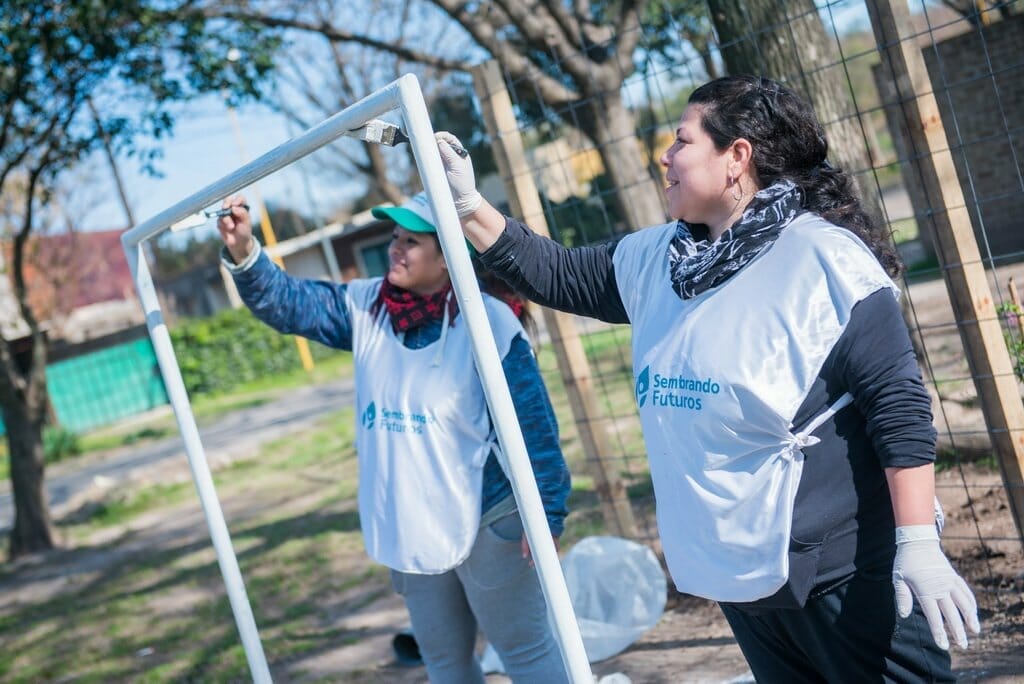
The Sowing Futures program has strengthened the relationship between John Deere and surrounding communities in Argentina through volunteerism since 2018. By creating over 2,115 volunteer opportunities for John Deere employees, the program has transformed communities and deepened the connection between the company, its employees and surrounding residents. With a focus on children and youth, Sowing Futures addresses the specific needs of vulnerable communities.
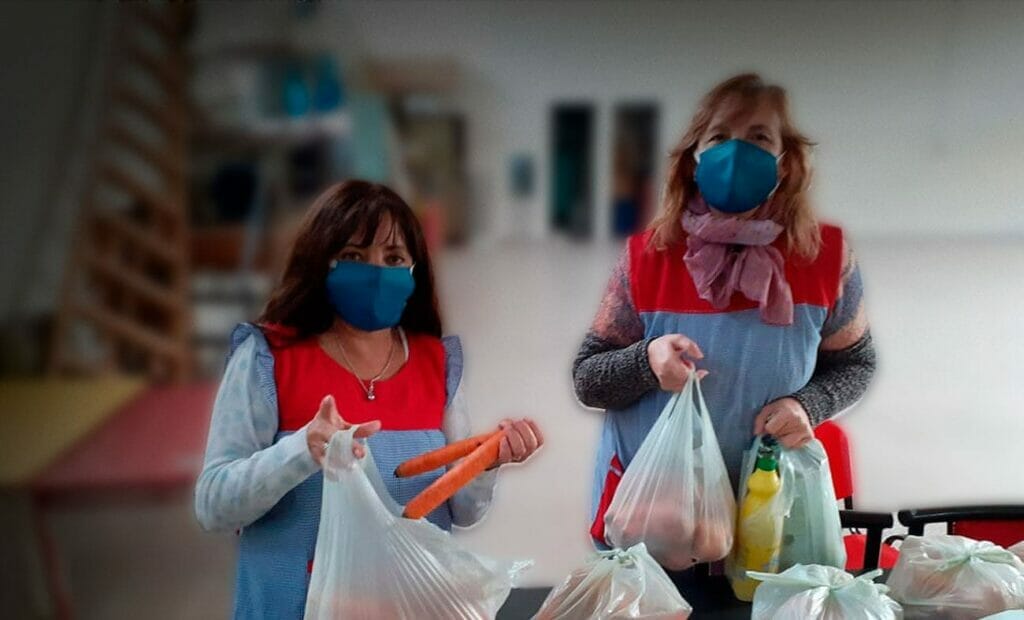
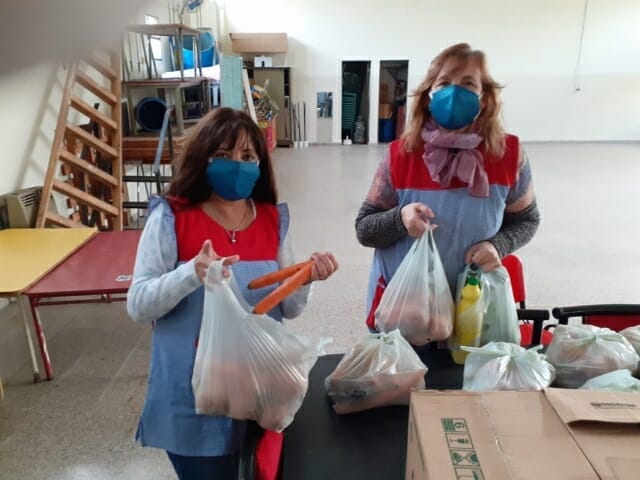
Together with John Deere Argentina employees, Sowing Futures participants are pioneers, driving participatory, transparent and sustainable solutions to local challenges. The situation in Argentina continues to be critical for those most vulnerable communities. Therefore, the program has a special commitment to supporting the food security of people, mainly the little ones, providing more than 55,000 food rations so far in 2024 together with civil organizations and volunteers.
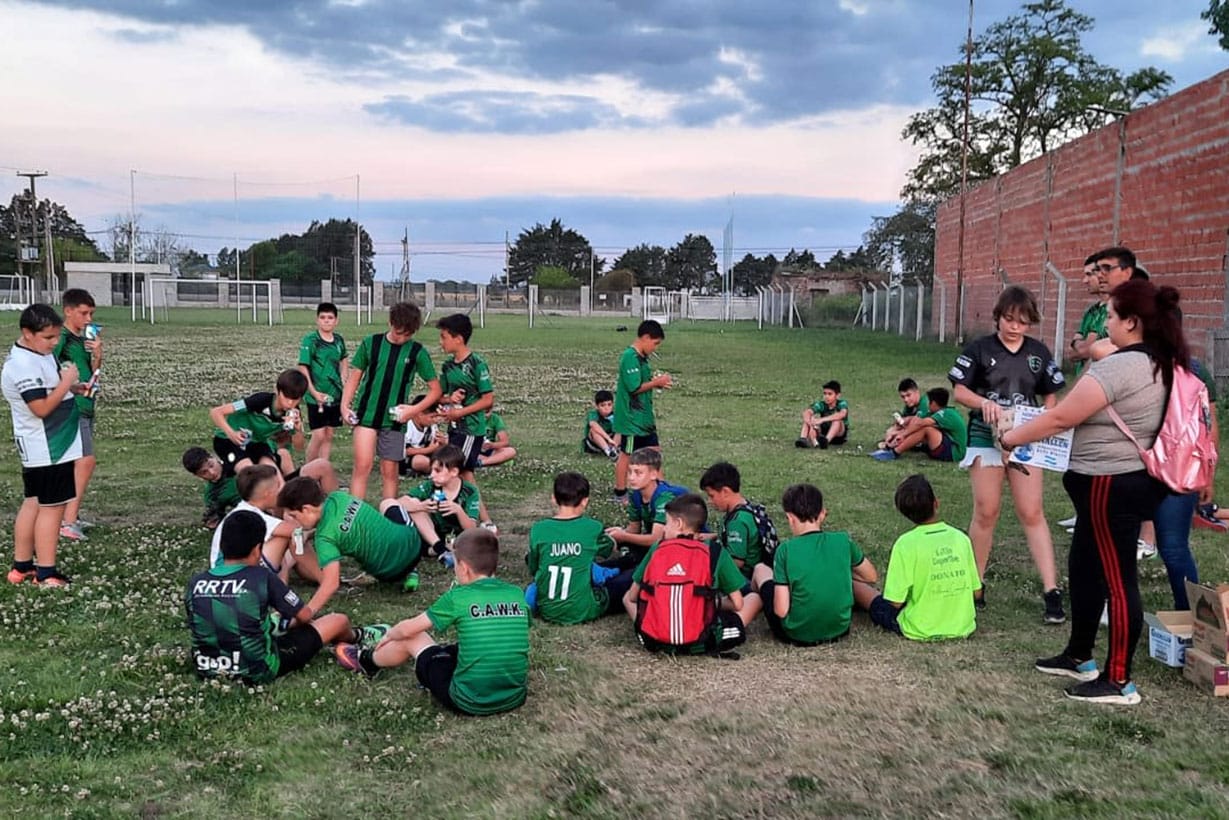
For this reason, there are currently projects that fall under the food security axis, such as MerenDar (Community Food Kitchens), which seek to activate dining rooms in neighborhood clubs to function as food support for young athletes who attend these institutions. This project has enabled 4 community food kitchen (2 in Las Rosas, 1 in Las Parejas and another in Capitán Bermúdez) to have installed capacity and can currently operate without our mediation. In 2025, a fifth community food Kitchen began operating thanks to Club Atlético El Expreso (city of El Trébol), who established 16 partnerships and enabled an unused area to operate and whose goal is to provide a snack for the institution's 498 young athletes.
Meanwhile, in the city of Rosario, El Potrero de las 4 Villas incorporated our fruit donation to make a leap in quality toward healthier snacks, becoming the sixth community food kitchen to receive our donation. What we do at El Potrero de las 4 Villas is something we try to replicate in all this similar spaces, complementing the focus on food security and seeking to make them increasingly healthier.
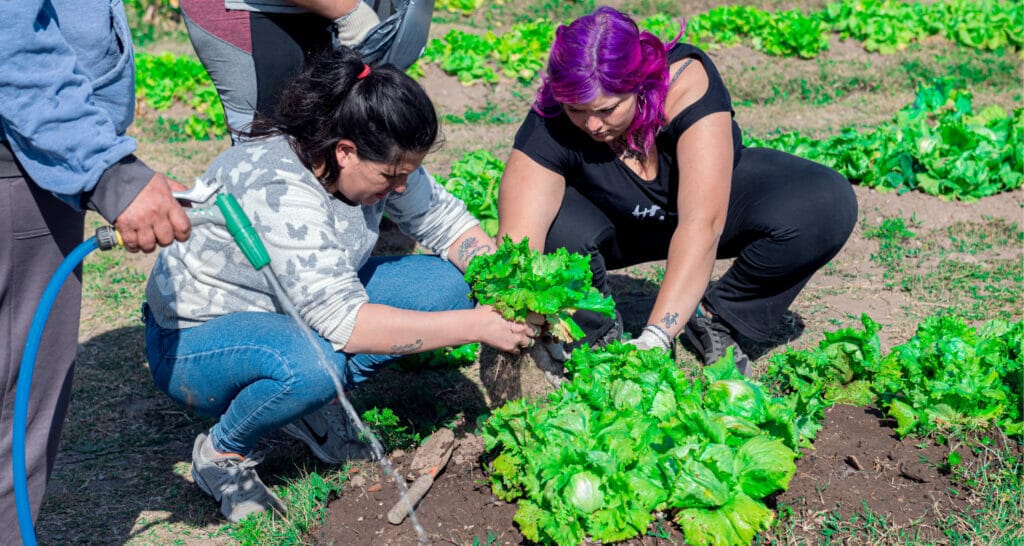
Since its inception in 2024, Proyect Nutrir Infancias (Nurturing Little Ones) has generated installed capacity in various community vegetable gardens created in kindergartens in Granadero Baigorria and Las Rosas with the aim of teaching children, parents, and teachers the importance of growing their own food so that the theoretical and practical experience gained in the classroom and in the community vegetable garden can be transferred to their own homes.
In addition to MerenDar (Community Food Kitchens) and Nutrir Infancias (Nurturing Little Ones), the Sowing Futures program also includes projects linked to the Quality Education axis such as Elementary School Upgrades (structural support to primary cycle educational institutions) and Career Guidance (talks linked to professional careers, trades and topics of interest linked to the future of adolescents upon finishing high school such as Artificial Intelligence, CV creation and job interviews), Mentoring (which generates personalized follow-up of a high school senior with a corporate volunteer who guides and accompanies him in the process of choosing a career or profession), 5S in Schools (a training provided in high schools on the traditional Japanese 5S approach to workplace organization and management. It is based on five Japanese words beginning with "S" and aims to improve efficiency, safety, and productivity by eliminating clutter and creating a cleaner, more orderly environment) and the Red CreSer (CreSer Network) a space formed in the city of Las Rosas by a group of neighbors who shared the same concerns as the city's youth. Since its founding, the network has been a community-based tool for the prevention of problematic substance use, working with students in the region's schools, focusing on alcohol and gambling addiction.
In the axis of Participatory Management and Climate Change, ours actually project are Plantar (Planting Seeds), together with the Baigorria Verde organization to raise awareness about the importance of trees for the environment. In a space provided by John Deere at its Granadero Baigorria plant, native plant species are grown and cared for, which are then planted in various green spaces throughout the region. Ayudando ando (Helping As I Go) which seeks to generate specific aid to different civil society organizations proposed by the John Deere and Pla by John Deere volunteer subcommittees.
In addition Sowing Futures has expanded its reach to other locations with a growing focus on improving the quality of life for disadvantaged youth and fostering social cohesion through education, civic participation, and climate resilience.
Companies seeking a positive impact on the communities where they lives
In July 2024, Global Communities Argentina established a new alliance in our country with Cargill, which was looking for an organization to develop its community impact plan in the cities of Alvear, Puerto San Martín, Venado Tuerto, Villa Gobernador Gálvez (province of Santa Fe), and Villa Mercedes (province of San Luis).
Our work began with a diagnostic of community issues through in-depth interviews with key community stakeholders. We also reviewed the company's history of community actions, as well as the experiences, interests, and concerns of Cargill Managers and community representatives in each city. Once the most relevant community issues were identified, aligned with the company's civic responsibility policy, we recommend possible courses of action.
In December 2024, we began the implementation phase of the Civil Society Organization Strengthening Plan, undergoing a self-assessment process guided by our field specialists using the Global Communities Institutional Development Index (IDI) tool. This was followed by Project Management Training, which also includes support in the development of the organizations and the implementation of each of the projects presented.
Finally, we designed the Monitoring and Evaluation system to complete the implementation cycle of Cargill's Community Impact Plan in Alvear, Puerto San Martín, Venado Tuerto, Villa Gobernador Gálvez (province of Santa Fe) and Villa Mercedes (province of San Luis).
We are currently working with Cargill to strengthen organizations and implement the first impact projects, which included, in the area of food security, the possibility of roofing the community food kitchens “Ranita Feliz” (happy little frog) in Villa Gobernador Gálvez. The Bives organization presented its project “Cáscara de Papa” (potato peel) which aims to raise awareness about good environmental practices among kindergarten and primary school students in the city of Villa Mercedes. The project has already begun its pilot composting experience with students from the Rincón Munay Kindergarten in Villa Mercedes.
For its part, the organization "Todos a la Escuela" (everyone to school) from the same town, presented its diversity and inclusion project to form a cooperative under the name “Lacitos de amor” (little ribbons love), which seeks to promote the employment of people with disabilities in the town. "Lacitos de amor" has already received the necessary equipment that will allow them to boost the production of their artisanal noodles.
Sowing Bright Futures for Argentinian Youth
The Sowing Futures program has strengthened the relationship between John Deere and surrounding communities in Argentina through volunteerism since 2018. By creating over 2,115 volunteer opportunities for John Deere employees, the program has transformed communities and deepened the connection between the company, its employees and surrounding residents. With a focus on children and youth, Sowing Futures addresses the specific needs of vulnerable communities.
Together with John Deere Argentina employees, Sowing Futures participants are pioneers, driving participatory, transparent and sustainable solutions to local challenges. The situation in Argentina continues to be critical for those most vulnerable communities. Therefore, the program has a special commitment to supporting the food security of people, mainly the little ones, providing more than 55,000 food rations so far in 2024 together with civil organizations and volunteers.
For this reason, there are currently projects that fall under the food security axis, such as MerenDar (Community Food Kitchens), which seek to activate dining rooms in neighborhood clubs to function as food support for young athletes who attend these institutions. This project has enabled 4 community food kitchen (2 in Las Rosas, 1 in Las Parejas and another in Capitán Bermúdez) to have installed capacity and can currently operate without our mediation. In 2025, a fifth community food Kitchen began operating thanks to Club Atlético El Expreso (city of El Trébol), who established 16 partnerships and enabled an unused area to operate and whose goal is to provide a snack for the institution's 498 young athletes.
Meanwhile, in the city of Rosario, El Potrero de las 4 Villas incorporated our fruit donation to make a leap in quality toward healthier snacks, becoming the sixth community food kitchen to receive our donation. What we do at El Potrero de las 4 Villas is something we try to replicate in all this similar spaces, complementing the focus on food security and seeking to make them increasingly healthier.
Since its inception in 2024, Proyect Nutrir Infancias (Nurturing Little Ones) has generated installed capacity in various community vegetable gardens created in kindergartens in Granadero Baigorria and Las Rosas with the aim of teaching children, parents, and teachers the importance of growing their own food so that the theoretical and practical experience gained in the classroom and in the community vegetable garden can be transferred to their own homes.
In addition to MerenDar (Community Food Kitchens) and Nutrir Infancias (Nurturing Little Ones), the Sowing Futures program also includes projects linked to the Quality Education axis such as Elementary School Upgrades (structural support to primary cycle educational institutions) and Career Guidance (talks linked to professional careers, trades and topics of interest linked to the future of adolescents upon finishing high school such as Artificial Intelligence, CV creation and job interviews), Mentoring (which generates personalized follow-up of a high school senior with a corporate volunteer who guides and accompanies him in the process of choosing a career or profession), 5S in Schools (a training provided in high schools on the traditional Japanese 5S approach to workplace organization and management. It is based on five Japanese words beginning with "S" and aims to improve efficiency, safety, and productivity by eliminating clutter and creating a cleaner, more orderly environment) and the Red CreSer (CreSer Network) a space formed in the city of Las Rosas by a group of neighbors who shared the same concerns as the city's youth. Since its founding, the network has been a community-based tool for the prevention of problematic substance use, working with students in the region's schools, focusing on alcohol and gambling addiction.
In the axis of Participatory Management and Climate Change, ours actually project are Plantar (Planting Seeds), together with the Baigorria Verde organization to raise awareness about the importance of trees for the environment. In a space provided by John Deere at its Granadero Baigorria plant, native plant species are grown and cared for, which are then planted in various green spaces throughout the region. Ayudando ando (Helping As I Go) which seeks to generate specific aid to different civil society organizations proposed by the John Deere and Pla by John Deere volunteer subcommittees.
In addition Sowing Futures has expanded its reach to other locations with a growing focus on improving the quality of life for disadvantaged youth and fostering social cohesion through education, civic participation, and climate resilience.
Companies seeking a positive impact on the communities where they lives
In July 2024, Global Communities Argentina established a new alliance in our country with Cargill, which was looking for an organization to develop its community impact plan in the cities of Alvear, Puerto San Martín, Venado Tuerto, Villa Gobernador Gálvez (province of Santa Fe), and Villa Mercedes (province of San Luis).
Our work began with a diagnostic of community issues through in-depth interviews with key community stakeholders. We also reviewed the company's history of community actions, as well as the experiences, interests, and concerns of Cargill Managers and community representatives in each city. Once the most relevant community issues were identified, aligned with the company's civic responsibility policy, we recommend possible courses of action.
In December 2024, we began the implementation phase of the Civil Society Organization Strengthening Plan, undergoing a self-assessment process guided by our field specialists using the Global Communities Institutional Development Index (IDI) tool. This was followed by Project Management Training, which also includes support in the development of the organizations and the implementation of each of the projects presented.
Finally, we designed the Monitoring and Evaluation system to complete the implementation cycle of Cargill's Community Impact Plan in Alvear, Puerto San Martín, Venado Tuerto, Villa Gobernador Gálvez (province of Santa Fe) and Villa Mercedes (province of San Luis).
We are currently working with Cargill to strengthen organizations and implement the first impact projects, which included, in the area of food security, the possibility of roofing the community food kitchens “Ranita Feliz” (happy little frog) in Villa Gobernador Gálvez. The Bives organization presented its project “Cáscara de Papa” (potato peel) which aims to raise awareness about good environmental practices among kindergarten and primary school students in the city of Villa Mercedes. The project has already begun its pilot composting experience with students from the Rincón Munay Kindergarten in Villa Mercedes.
For its part, the organization "Todos a la Escuela" (everyone to school) from the same town, presented its diversity and inclusion project to form a cooperative under the name “Lacitos de amor” (little ribbons love), which seeks to promote the employment of people with disabilities in the town. "Lacitos de amor" has already received the necessary equipment that will allow them to boost the production of their artisanal noodles.
Previous Programs
Supporting Small-Scale Farmers
In 2022, Global Communities provided advisory services to Corteva Agriscience to evaluate the outcomes of their Prospera program, which sought to improve the productivity of smallholder farmers in Argentina. We offered technical support in designing and implementing an evaluation of the pilot phase, helping to outline potential plans for continuation and partnership development.
Our specialized team of agronomists conducted field assessments with over 100 small-scale farmers in hard-to-reach areas of Buenos Aires, Córdoba, Corrientes, Santa Fe, Santiago del Estero, and Salta provinces. In addition, we analyzed internal documentation and offered on-site technical assistance and guidance to the group of volunteers implementing the program.
The initiative concluded the same year with a report that highlighted lessons learned, opportunities for improvement, and recommendations for progressive scaling and continuity.
Parents, children and volunteers building a community garden
In the city of Granadero Baigorria, community residents and John Deere volunteers worked with the parents of preschool students to grow and sustain a community garden. The project taught parents and their children about the impact that developing healthy eating habits has on children’s educational growth and offered classes on how to prepare healthy meals and create gardens at home.
Confronting the COVID-19 Pandemic
When the COVID-19 pandemic began in 2020, Sowing Futures program staff in Argentina worked tirelessly to reassess local conditions, maintain contact with program stakeholders, coordinate with local John Deere teams and reprogram activities to meet the growing needs of at-risk families. Between April and October 2020, John Deere Argentina, through Sowing Futures, delivered 129,728 food rations and 2,930 hygiene kits to approximately 1,146 families across Granadero Baigorria and Las Rosas. We also provided medical equipment and supplies to the Las Rosas health clinic. Finally, to ensure relief continues to reach those most in need, we developed a network of local partners that include Deere Argentine/Pla, municipal governments, neighborhood groups and community-based organizations that coordinate ongoing COVID-19 response efforts.
News from Global Communities Argentina
Impact
121,203
Direct beneficiaries from 2018-2023
36
Communities supported from 2018-2023
8832
Civil and corporate volunteers
News
Celebrating 10 Years of Positive Impact in Brazil
In 2014, Global Communities arrived in Brazil in partnership with the John Deere Foundation to implement the Sowing Futures program in Horizontina (RS). Since then, we have expanded our operations to promote sustainable development in 8 Brazilian states and supported community development through the mobilization of more than 9,000 volunteers and the training of more…
Sowing Futures and Lots of Hope in Argentina
By: Sergio Scheffer and Natalia Lopez-Thismon Translated by: Samuel Lau In the peripheral neighborhoods of cities in Argentina, it is not uncommon to find large empty lots gathering junk. Giuliana (Yuli) and her four children, including her 13-year-old son Tiziano (Tizi), lived next to one of these vacant lots. Over the years, she and her…
Reflections on Programming Response to the COVID-19 Pandemic
The COVID-19 pandemic has continued to impact communities beyond what many thought would be a few weeks of quarantine. As we recognize the second anniversary of the pandemic, we reflect on Global Communities’ country teams that are hard at work to help mitigate the impacts of the pandemic on their communities. We were able to…